
By Lauren Lovoy-Granados
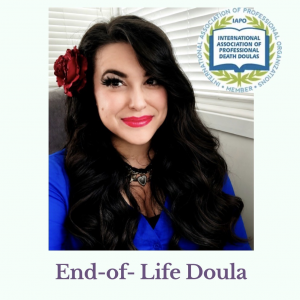
My name is Lauren Lovoy-Granados, M.A., and I am the founder of Forget-Me-Not End-of-Life Care. My journey into end-of-life care began decades before I ever knew there was such a thing as an end-of-life doula.
When I was five years old, my father died in a helicopter accident. He was only 29 years old and left behind a wife, two young children, and a family whose world would never be the same. My dad was the soul of our family. He seemed to hold everything together, so when he died, my world came crashing down.
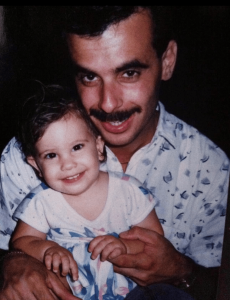 I had never experienced death before, and the adults around me were drowning in their own grief. My mom had difficulty talking about my dad because losing him was so painful.
My paternal grandmother — my yiayia, which means “grandmother” in Greek — kept his memory alive for me.
She told me stories about him and reminded me how proud he would be of me. Whenever a butterfly flew near me, she would say it was my dad coming to visit. When I cried because I missed him, she told me he was building us a castle in heaven and would be waiting there until we met again.
Most importantly, I was taught to live my life in a way that honored him: Be a good person for your dad. Do all the things he didn’t have the chance to do.
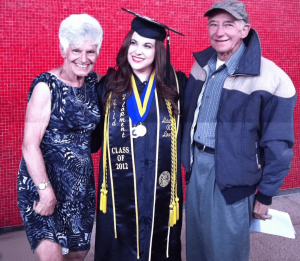
My mom was suddenly a single mother working hard to care for my little brother and me, so I spent much of my childhood with my paternal grandparents. They helped raise us and became two of the most important people in my life.
 Death continued to surround my childhood. Shortly after my father died, my maternal grandfather passed away. When I was in elementary school, my uncle died suddenly at home, and my mother and I found him. Not long afterward, my maternal grandmother died. It felt as though everyone I loved was dying, and I became terrified of losing anyone else.
For years, death felt like something that simply took from me.
Learning to Sit Beside Death
As I grew older, my relationship with death began to change. Not because it became less painful, but because I learned that being present at the end of someone’s life could be an act of love.
In 2017, while I was pregnant with my second daughter, my paternal grandfather — the man who had helped raise me — went into hospice care at home. I stood beside him and held his hand as he took his final breath.
I couldn’t stop him from dying, but I could make sure he was loved, comforted, and not alone. For the first time, I learned that I could sit beside death instead of only fearing it.
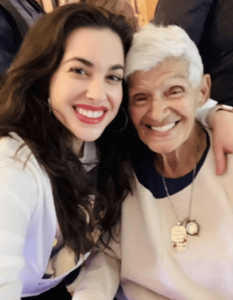 By then, my yiayia had developed Alzheimer’s disease. She was not simply my grandmother; she was my best friend, my greatest supporter, and the person who kept my father’s memory alive. I began grieving her long before she was physically gone, but I continued to shower her with love, even when she no longer remembered me.
She would sometimes look at me and say, “I don’t know who you are, but I know that I love you.”
I have never forgotten those words.
One heartbreaking day, my yiayia could not be awakened from her sleep. She was hospitalized and remained unresponsive.
I made sure her wishes were honored and that she received her last rites. I stayed beside her, holding her hand, singing, reading, and talking to her.
When I knew the end was coming, I told her it was okay to let go. I told her to go be with my father — her son — in heaven.
Then, wrapped in my arms, with my forehead pressed against hers, she took her final breath.
It was heartbreaking and sacred.
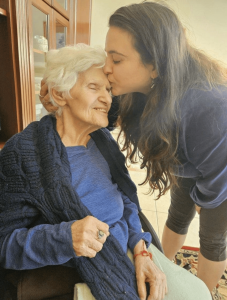 Both of the grandparents who helped raise me allowed me to witness their transition to the other side. I consider that an incredible honor, but honor does not erase heartbreak. I had so much love left to give my yiayia, and I had to figure out where all that love could go.
Turning Grief Into Purpose
In some ways, I had been searching for a place to put my grief for years.
As a child, I wrote poetry about grief and loss. As a teenager, I created scrapbooks, videos, family trees, and other legacy projects in honor of the people I had lost. Eventually, I began creating them for grieving friends and family members, too.
Preserving someone’s legacy mattered to me because I understood what those memories could mean to the people left behind.
My yiayia’s stories gave me pieces of my father that I never had the opportunity to discover for myself. She taught me that telling someone’s stories, looking at photographs, saying their name, and preserving what made them who they were are all acts of love.
In many ways, she was teaching me about legacy work before I knew there was a name for it.
Caring for people during vulnerable moments became another thread throughout my life. I volunteered in hospitals and nursing facilities, became a foster parent in my twenties, and have spent more than fifteen years supporting children and families.
But my experiences with death kept calling me toward something else.
I became a certified end-of-life doula and grief coach, began volunteering in hospice, and created Forget-Me-Not End-of-Life Care. Through this mission-based service, I provide emotional, practical, and companionship-based support at no cost to individuals and families.
I can sit beside someone at the end of life, listen to their stories, help preserve their memories, create legacy projects, sit vigil during their final hours, or simply support a family that is frightened and exhausted.
Where All That Love Goes
For most of my life, I was afraid of death because it had taken so many people I loved.
Now, I sit beside it.
That doesn’t mean I have conquered grief. I still miss my father and my grandparents. I still visit their graves. Anniversaries still hurt. There are days when I would give anything for another conversation, another hug, or one more ordinary afternoon with the people I love.
My work does not make my grief disappear.
It gives my grief somewhere to go.
My yiayia began teaching me how to do this when I was five. By saying my father’s name and telling his stories, she showed me that physical absence does not require us to stop having a relationship with someone.
Now I have the privilege of helping other people do the same.
 I couldn’t protect that five-year-old little girl from losing her father. I couldn’t stop my grandparents or my uncle from dying, and I couldn’t stop Alzheimer’s from taking pieces of my yiayia before I was ready to let her go.
But I can decide what I do with the love they left behind.
I can sit beside someone who is dying so they are not alone. I can help a family preserve a story before it is lost. I can create something tangible for someone who desperately wants to feel close to the person they miss. I can hold space for grief without trying to rush it away.
And every time I do, I carry a little piece of my family with me.
My grief didn’t become happiness.
It became my purpose.
Because if there is one thing a lifetime of loving and losing people has taught me, it is this:
Love doesn’t end when someone dies. It simply has to learn a new way to exist.
For more information about Lauren, you can check out her website.
Support us by driving awareness!
Subscribe to our YouTube channel at YouTube.com/GrapGrief.
Follow us on Facebook at Facebook.com/GrapGrief and on Instagram at Instagram.com/GrapGrief.