
By Julie Farnsworth
I am 54 years old- perhaps halfway through life if I follow in the footsteps of my Grandmom, who is currently 102, and my great aunt, who is currently 111. As a social worker over the last 30 years, I have dedicated my life to helping others and have seen people at their lowest and highest points.
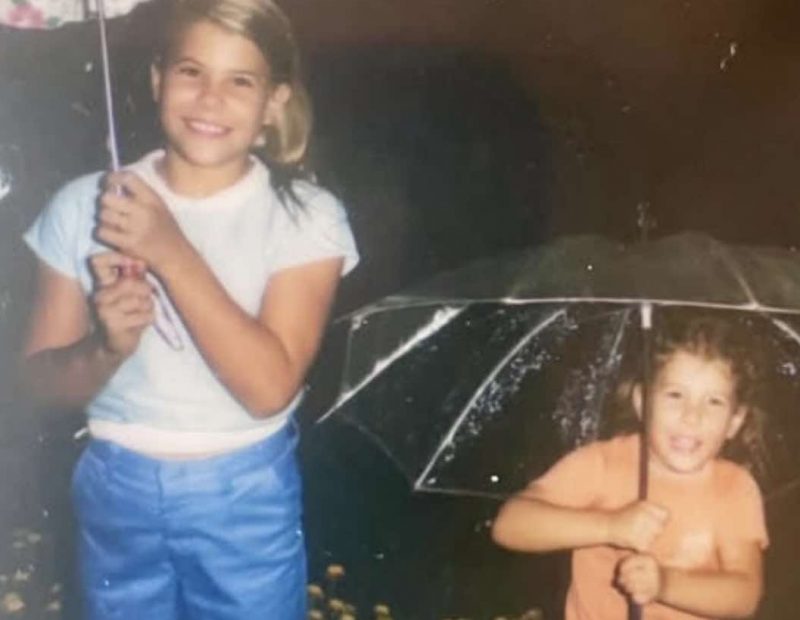
My story of hope and inspiration starts at the age of 10. Before I knew what social work was, I started joining my grandmother, who was a retired social worker at the time, on visits to see some women she regularly saw in a nursing facility. She had found three women, whom she called her “ladies,” who had no visitors until she came along. She made it her purpose to visit them weekly. I would tag along on visits and watch her bring them the food they had requested on their previous visits (my grandmother grew up in the South, and cooking and feeding people was her love language). While sitting and listening to them talk, I knew the feelings I had during these visits were ones I couldn’t describe at the time, but I knew I wanted to be part of it.
This was bigger than me, and I knew then that I wanted to follow in her footsteps and help people to feel better and live better lives. I knew that the transformation in a person’s well-being could be brought about by a simple act of kindness that my grandmother modeled for me. These “simple” things taught me valuable lessons in gratitude (the actual practice of gratitude ended up helping me overcome grief and loss as an adult). Overall, seeing the results of this care, compassion, and connection before my 10-year-old eyes had a great impact on me.
When I turned 12, there was an opportunity through the Red Cross at school. I felt compelled to volunteer as a candy striper at the nursing home, and I continued to volunteer there through high school. I am volunteering there again now, and I think of my grandmother every time I come into the building, walk up the hall to visit with my “ladies,” and feel grateful that I get to do this.
So, growing up, I knew that my life path was leading me to study and learn more about people and what makes them “tick.” When I went off to college, I decided to major in psychology and learned so many fascinating things about how our brains and experiences in life help shape us. I completed an internship in a women’s shelter and was struck by the strength and resilience of the women who were there, trying to create better lives for themselves and their children. I was heartbroken to hear their stories, but in awe of their strength and resiliency. After completing my bachelor’s degree in psychology, I started my career in social work as a foster care case worker. This, along with my internship, would prove to be formative experiences in not only my career, but also personally. I realized that I had been living in a very sheltered world prior to this work. If you are not familiar with the world of foster care, the stories of hardship, trauma, and generational abuse are something that never leave you once you are aware that these things happen.
After working in the field for about 10 years, I went back to school to get my master’s degree in human and social services. This led to becoming a counselor in a community mental health practice. As a counselor, I heard so many tragic, heartbreaking, horrific stories, but also ones that amazed me and touched my heart and soul. I was the keeper of everyone’s grief, trauma, and loss, but also of amazing growth, healing, resiliency, and the power of the human spirit. I learned that people really do have the ability to change their lives regardless of what has happened to them.
All of these experiences were leading me to focus more on the connection between trauma, grief, and loss, and the impact that traumatic experiences have on the brain and body. My question was, “Why did some people overcome very negative experiences, while others remained stuck?” Simply put, the source of our bodies’ experiences of suffering or happiness, or negative vs. positive, starts with our brains. The brain is truly fascinating. I began to study all of this from a neuroscience perspective and became a certified Neuro-change Practitioner. During my studies, I learned that the brain is “plastic”— meaning that it has the capacity to be reshaped, redirected, or rewired.
 I learned that we have the power to change our thoughts and beliefs, even if we have been convinced since childhood that this is just how we are or just how life is. We can actually begin to heal ourselves by focusing and working on things such as practicing daily gratitude, positive thoughts, affirmations, and mantras. The brain amazingly starts to reverse negative connections that were made during childhood, and even during traumatic events. The brain believes the new positive input it is receiving. In essence, it forms new channels with new circuits. This is all very exciting stuff to me. I started sharing mini neuroscience lessons with my clients and saw that the more people understood this, the better their healing journey became.
My story starts to get more personal here. After spending all of these years helping others with whatever issues they were struggling with, my mental health started to decline. I was 52 and dealing with my own life events. I had lost my baby sister to colon cancer at the age of 40, about six years prior to this, and in my typical fashion, had helped to take care of everyone else. I have never seen anyone so sick, and I don’t know how she kept persevering through her treatments. She gave a really good fight before her body couldn’t take it anymore. I had never really fully dealt with this loss because it was too painful. On top of this, I had also gone through a divorce after a 25-year marriage that had many unresolved emotional consequences, about four years prior. I kept pushing all of this grief and loss to the side.
My brain and body began to suffer. The years of ignoring my own needs and my untreated pain started to catch up to me. There is also something called vicarious trauma that happens to people who have been in a helping profession for a long time. I had literally taken on the weight of my corner of the world, and my body and brain essentially had layers of this that had accumulated over the years and had nowhere to go. I ended up having to quit my job and was admitted to the hospital for severe depression and anxiety. My body basically just broke down, and I completely understood how the term “nervous breakdown” was coined. I wasn’t eating or sleeping. I was extremely anxious and depressed, and for the first time in my life, had to rely on help from others. I was in the hospital for a week, in an outpatient treatment program for a month, and was trying multiple medications. I didn’t work for about three months.
So, how does this all get better? Well, remember when I mentioned that the brain is plastic and has the power to heal itself? I found out from my own personal experience that this is indeed true. I started to treat myself like one of my clients. I played positive affirmations and recited them over and over again every night for a few months. I kept a gratitude journal and wrote down three things that I was grateful for each day, along with things that made me smile or laugh and ways that I could have made the day better. I practiced self-care — eating healthier, getting physical exercise, taking long, relaxing showers and baths, resting when I felt the need to, and putting my needs first.
This whole process went on for over a year. I started to feel better and stronger, and literally like a different version of myself started to emerge. I felt more comfortable in my own skin. I thought about my own needs, in addition to the needs of others, for the first time ever. I began to feel like the person that I was always meant to be. I acknowledged all my losses and traumatic events and the fact that I needed to allow myself the opportunity to grieve them, and I let myself do it. I began to see that all of this pain, loss, grief, and suffering I had endured eventually led me to claim some true gifts. The gifts of confidence, strength, resiliency, understanding, appreciation for life and nature and people, gratitude, joy and celebration of small things, being able to see glimmers throughout the day — no matter how hard the day is, the beauty in slowing down, reading, writing, talking to myself kindly, talking to my dogs and more strangers with kindness.
 All the pieces of my journey since the age of 10 have led me to the present, where I can clearly see that my purpose is to impact and reach as many people as I can with my message of hope, inspiration, and resiliency. The hope that we all have the power to change and live better lives. I have decided that the next part of my life’s work and journey will be focused on helping others to find their gifts and heal after grief and loss. Life is too short to be unhappy; every one of us has the power to change, no matter what has happened to us. No, it’s not easy, and yes, it takes work, but all the work is so worth it. Grief and loss are sad, complicated, messy, and complex, but our bodies and brains were literally designed to endure this pain and heal. We have evolved enough now to know that we do not have to merely endure it.
We have a unique opportunity to achieve a different outcome if we are willing to consider all the ways we can work to become truly better and stronger versions of ourselves. The future is brighter with this new knowledge that we have survived and gotten to this crucial point in our journeys, where we can now begin to heal. Life can change in an instant, and nothing is certain, but this should serve as motivation to not only endure and survive, but actually thrive instead.
For more information about Julie, you can check out her website.
Support us by driving awareness!
Subscribe to our YouTube channel at YouTube.com/GrapGrief.
Follow us on Facebook at Facebook.com/GrapGrief and on Instagram at Instagram.com/GrapGrief.